

The difference between a good team and a great one often comes down to one critical factor: communication.
Effective communication goes beyond simply exchanging information. It involves ensuring that the intended message is received and understood and that feedback is heard and acted upon.
Studies show that companies with effective communication strategies are three and a half times more likely to outperform their peers. A breakdown in communication can lead to misunderstandings, conflict, and inefficiency, so investing in these necessary communication skills is crucial.
The Four Pillars of Team Communication
Active Listening
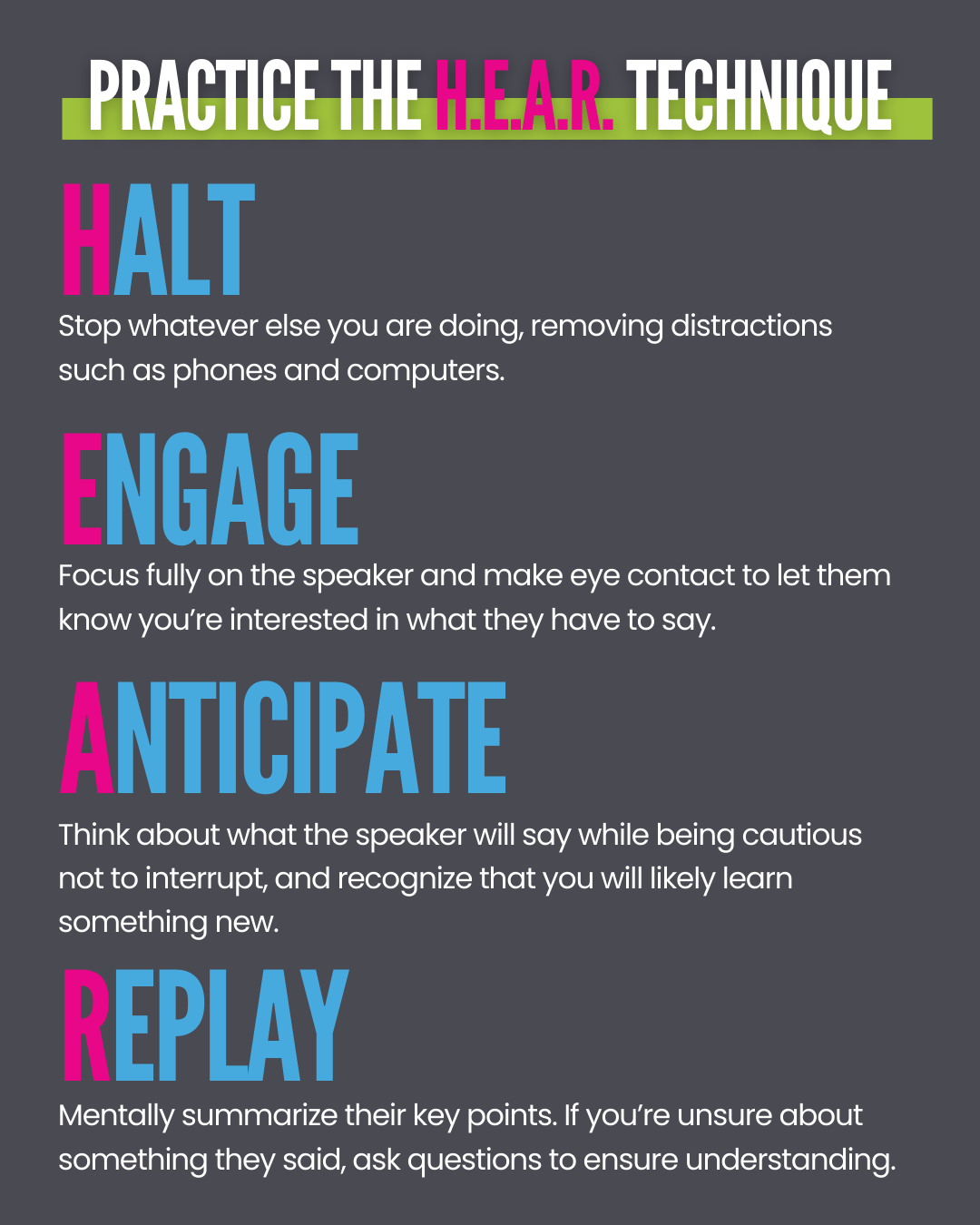
Active listening is a fundamental skill that requires more than just hearing words and staying quiet while others speak. It is about creating a space where ideas can flourish and team members feel understood and valued. This skill involves being fully present and engaged when someone is speaking.
To master it, practice the “HEAR” technique:
Empathy
Empathy in communication is about understanding the feelings and perspectives of others. When you approach conversations with empathy, you show respect for differing viewpoints, even if you disagree. This is especially important in team dynamics where diverse perspectives contribute to innovative solutions.
Here’s how to develop it:
- Acknowledge Emotions: Recognize when someone is upset, frustrated, or excited, and validate their feelings.
- Ask Open-Ended Questions: Encourage others to share their thoughts and emotions by asking questions that require more than a yes or no answer.
- Put Yourself in Their Shoes: Try to see the situation from the other person’s perspective to better understand their reasoning and emotional state.
Non-Verbal
Non-verbal communication is an often overlooked aspect of effective communication. Our body language, facial expressions, and tone of voice can say just as much—if not more—than the words we speak. Developing an understanding of non-verbal cues is essential for interpreting messages fully and ensuring that we are not sending mixed signals.
Key points to consider:
- Body Language: Crossed arms can signal defensiveness, while an open posture indicates receptivity.
- Facial Expressions: A smile or frown can communicate emotions without a single word being spoken.
- Tone of Voice: A friendly, calm tone promotes positive communication, while a harsh tone can create tension.
Providing Constructive Feedback
Communication isn’t just about properly delivering and receiving messages—it’s also about giving feedback in a way that is helpful and constructive. When feedback is delivered effectively, it motivates individuals to improve.
Tips for giving constructive feedback:
- Be Specific: Avoid vague comments like “You did great.” Instead, focus on specific actions or behaviors that made an impact, both positive and negative.
- Use “I” Statements: Frame feedback from your perspective to avoid sounding accusatory. For example, “I noticed that the report was submitted late, and it caused a delay in the project” instead of “You always submit things late.”
- Balance Positive and Negative: Acknowledge strengths alongside areas for improvement. A positive, balanced approach promotes growth and encourages team members to act on feedback.
- Focus on Actions, Not Personality: Critique behaviors or work habits, not personal attributes. This keeps the conversation constructive and free of personal judgment.
Creating an Open Communication Culture
To improve communication across the team, it’s important to create a culture that values open, honest communication. Encourage team members to speak up when they have ideas or concerns, and make sure they feel safe doing so.
Here’s how you can promote this culture:
- Encourage Transparency: Share information openly to keep everyone informed and aligned.
- Foster Psychological Safety: Ensure team members feel comfortable sharing their opinions without fear of judgment or retaliation.
- Lead by Example: As a leader or facilitator, model good communication practices such as active listening, empathy, and clear feedback.
Effective communication is the foundation of any high-performing team. By fostering active listening, empathy, and openness, you can create an environment where ideas flow freely, feedback is constructive, and everyone feels valued.
Over time, this culture breaks down silos, strengthens relationships, and drives greater team performance and engagement. Focus on consistent improvement, and watch communication transform your team’s dynamics and results.
Ready to take the next step in building a stronger, more cohesive team? Consider a team-building event like the Western Round-Up, designed to bring your team together in a fun, interactive way.
Start transforming your team dynamics today—get a quote for your next team-building event!
